



Have you ever checked your credit card statement and wondered why your outstanding balance increased even though you made a payment?
Credit card interest could be the reason.
Many people use credit cards for shopping, groceries, travel, online payments, and unexpected expenses. But not everyone understands how interest works or how quickly borrowing costs can add up.
You might see terms such as APR, purchase interest rate, cash advance rate, minimum payment, and grace period on your credit card statement. These terms can look confusing when you are new to credit cards.

Understanding them can help you avoid unnecessary interest charges and manage your money more effectively.
In this guide, you will learn how credit card interest works, what APR means, how billing cycles affect your payments, and how you may be able to avoid interest on everyday purchases.
Table of Contents
- 1. What Is Credit Card Interest?
- 2. What Is APR on a Credit Card?
- 3. How Is Credit Card Interest Calculated?
- 4. What Is a Credit Card Grace Period?
- 5. What Happens If You Pay Only the Minimum Amount?
- APR, Billing Cycles, Cash Advances, and Balance Transfers
- 6. What Is the Difference Between APR and an Interest Rate?
- 7. What Is a Credit Card Billing Cycle?
- 8. Why Are Credit Card Cash Advances Expensive?
- 9. What Is a Balance Transfer Credit Card?
- 10. What Is a Promotional 0% APR Offer?
- 11. Why Can Credit Card Interest Appear Even After You Make a Payment?
- How to Avoid Credit Card Interest and Save Money
- 12. Pay Your Full Statement Balance by the Due Date
- 13. Pay More Than the Minimum Amount
- 14. Avoid Using Your Credit Card for Cash Advances
- 15. Set Up Payment Reminders and Automatic Payments
- 16. Compare Credit Card Interest Rates Before Applying
- 17. Contact Your Credit Card Provider if You Are Struggling
- 18. Create a Simple Credit Card Interest Management Plan
- Frequently Asked Questions About Credit Card Interest
- Final Thoughts: Use Your Credit Card Without Paying Unnecessary Interest
1. What Is Credit Card Interest?
Credit card interest is the cost you pay when you borrow money through your credit card and do not repay the relevant balance within the interest-free period, if your card offers one.
When you make a purchase using a credit card, your card provider pays the merchant on your behalf. You then owe that amount to the card issuer.
If you repay the eligible balance in full by the payment due date, you may avoid interest on purchases, depending on your card’s terms.
However, if you carry an outstanding balance, the card issuer may charge interest according to your card agreement.
For example:
Imagine you purchase a laptop for $1,000 using your credit card.
Your monthly statement shows an outstanding balance of $1,000.
If your card offers an interest-free grace period and you pay the full eligible statement balance by the due date, you may not pay interest on that purchase.
But if you pay only $200, the remaining balance may attract interest according to your card’s terms.
This is why understanding credit card interest matters. Even a small unpaid balance can become expensive when interest continues to accumulate.
2. What Is APR on a Credit Card?
APR stands for Annual Percentage Rate.
It represents the annualised cost of borrowing on a credit card. It is one of the main figures you should check before choosing a credit card.
For example, if a credit card has a 24% APR, the stated annual rate is 24%.
However, this does not mean the issuer simply adds 24% to your balance every month.
Credit card interest is commonly calculated using a periodic rate, often on a daily basis. The exact calculation method depends on the card agreement.

A credit card may also have different APRs for different transaction types.
Common examples include:
- Purchase APR: The interest rate applied to eligible shopping and everyday purchases.
- Cash advance APR: The rate applied when you withdraw cash using your credit card.
- Balance transfer APR: The rate applied to balances transferred from another credit card.
- Promotional APR: A temporary lower interest rate offered for a specific period.
- Penalty APR: A higher rate that may apply under certain conditions in your card agreement.
Always review the rates and conditions before using your credit card.
A low promotional APR may increase after the offer ends. A balance transfer may also include a separate transfer fee.
3. How Is Credit Card Interest Calculated?
Many credit card issuers calculate interest daily. Some use an average daily balance method.
The calculation depends on your card agreement, applicable interest rates, payments, transactions, and the number of days in your billing cycle.
Let’s understand a simplified example.
Imagine you have:
- Credit card balance: $1,000
- Annual interest rate: 24%
- Billing period: 30 days
First, convert the annual interest rate into a daily rate.
24% ÷ 365 = approximately 0.06575% per day.
If your average daily balance remains $1,000 throughout the 30-day period, an estimated interest charge would be:
$1,000 × 0.24 ÷ 365 × 30 = approximately $19.73.
Illustrative calculation only. Actual charges depend on the issuer’s calculation method, transaction dates, payments, fees, and card terms.
Why Does Your Payment Date Matter?
When interest accrues daily, reducing your balance earlier can reduce the amount of interest you pay.
For example, imagine you owe $1,000 on your credit card.
If you make a payment that reduces your balance to $700, your future interest calculation may use a lower balance.
This is one reason why paying more than the minimum amount can help reduce borrowing costs.
You can check your credit card agreement or statement to understand the exact interest calculation method used by your provider.
4. What Is a Credit Card Grace Period?
A grace period is the time between the end of a billing cycle and your payment due date.
During this period, you may be able to repay your eligible purchases without paying interest.
For example:
Imagine your credit card billing cycle ends on the last day of each month.
Your statement shows that you owe $800. Your payment due date is 20 days later.
If your card provides a grace period and you pay the full eligible statement balance by the due date, you may avoid interest on those purchases.
However, grace periods come with conditions.
- Not every credit card offers the same grace period.
- You generally need to pay the full eligible statement balance.
- Cash advances usually do not receive an interest-free grace period.
- Balance transfers may have different interest terms.
- Carrying an unpaid balance may affect the grace period on new purchases.
Always check your card agreement to understand when the grace period applies.
For example, the US Consumer Financial Protection Bureau explains that many credit cards provide a grace period for purchases, but issuers are not required to offer one. In Canada, federally regulated financial institutions must provide at least a 21-day grace period for purchases. Rules differ between countries.
5. What Happens If You Pay Only the Minimum Amount?
Your credit card statement usually displays a minimum payment amount.
This is the smallest payment you must make by the due date to meet the payment requirement under your card agreement.
Paying the minimum can help you avoid being treated as having missed the required payment. However, it does not mean your full balance is cleared.

The remaining balance may continue to attract interest.
Let’s look at an example.
Imagine your credit card statement shows:
- Outstanding balance: $2,000
- Minimum payment: $80
- Annual interest rate: 24%
You pay the required $80.
Your remaining balance is not simply cleared. Interest and any applicable charges may continue to affect what you owe.
If you keep making only minimum payments while continuing to use the card, your debt could take much longer to repay.
Why Minimum Payments Can Become Expensive
Minimum payments are designed to keep your account within the required repayment terms. They are not necessarily designed to help you clear your debt quickly.
Consider these practical habits:
- Pay the full statement balance when you can afford it.
- If you cannot pay in full, pay more than the minimum where possible.
- Avoid adding unnecessary purchases to an outstanding balance.
- Review the interest charges on every statement.
- Contact your card provider if repayments become difficult.
Even small additional payments can help reduce the balance on which future interest may be calculated.
APR, Billing Cycles, Cash Advances, and Balance Transfers
Understanding credit card interest can help you avoid expensive borrowing mistakes. However, you also need to understand how different transactions affect the amount you pay.
A regular purchase, cash withdrawal, and balance transfer may all have different interest rates and repayment conditions.
Let’s explore how they work.
6. What Is the Difference Between APR and an Interest Rate?
APR and interest rate are closely related terms, but they do not always mean exactly the same thing.
An interest rate represents the cost of borrowing money over a specified period.
APR stands for Annual Percentage Rate. It expresses the annualised cost of borrowing. Depending on the country and product, APR may include certain fees in addition to interest.

For many credit cards, the purchase APR is the main rate used to calculate interest on unpaid purchases.
However, you should not assume that every fee is included in the APR shown on your credit card offer.
For example, consider a credit card with:
- Purchase APR: 22%
- Cash advance APR: 29%
- Balance transfer APR: 20%
These rates show that different types of transactions can have different borrowing costs.
Before accepting a credit card offer, check:
- Purchase interest rate.
- Cash advance interest rate.
- Balance transfer rate.
- Annual fees.
- Transaction fees.
- Late payment charges.
- Promotional rate conditions.
A card with a low advertised APR may still have fees or conditions that make it expensive to use.
7. What Is a Credit Card Billing Cycle?
A billing cycle is the period during which your credit card provider records your transactions, payments, fees, and other account activity.
Most credit cards follow a monthly billing cycle, although the exact dates depend on the provider.
At the end of the cycle, your card issuer prepares a statement showing your account activity.
A typical credit card statement includes:
- Previous statement balance.
- New purchases.
- Payments received.
- Refunds and credits.
- Interest charges.
- Other applicable fees.
- Closing statement balance.
- Minimum payment due.
- Payment due date.
Example of a Credit Card Billing Cycle
Imagine your credit card has the following dates:
| Credit card detail | Example |
|---|---|
| Billing cycle starts | 1 March |
| Billing cycle ends | 31 March |
| Statement generated | 31 March |
| Payment due date | 20 April |
During March, you make purchases worth $600.
At the end of the billing cycle, your statement shows a balance of $600.
If your card offers an applicable grace period and you pay the full eligible statement balance by 20 April, you may avoid purchase interest.
If you pay only part of the balance, the unpaid amount may attract interest according to your card agreement.
Always check your actual statement dates and payment conditions. They may differ from this example.
8. Why Are Credit Card Cash Advances Expensive?
A cash advance allows you to withdraw cash using your credit card.
You may be able to withdraw money from an ATM or access cash through other services supported by your card provider.
Although this may seem convenient during an emergency, cash advances can be expensive.
They often involve two major costs.
Cash Advance Interest
Cash advances commonly have a separate APR. This rate may be higher than the purchase APR.
Unlike eligible purchases, cash advances generally do not receive an interest-free grace period.
Interest may start accumulating from the transaction date.
Cash Advance Fees
Your credit card provider may charge a cash advance fee.
This could be a fixed amount or a percentage of the withdrawal, depending on your agreement.
Example of a Cash Advance
Imagine you withdraw $500 using your credit card.
Your card has:
- Cash advance amount: $500
- Cash advance APR: 29%
- Cash advance fee: 3% of the withdrawal
The cash advance fee would be $15.
Interest may also begin accumulating immediately.
This means your borrowing cost can increase even if you repay the cash advance relatively quickly.
Before withdrawing cash, check the fees, interest rate, and repayment conditions.
If possible, consider lower-cost alternatives before using your credit card for cash withdrawals.
9. What Is a Balance Transfer Credit Card?
A balance transfer allows you to move an outstanding credit card balance from one card to another.
Some credit card providers offer promotional interest rates on transferred balances.
For example, imagine you have $3,000 outstanding on a credit card with a 24% APR.
Another provider offers a promotional 0% balance transfer rate for 12 months.
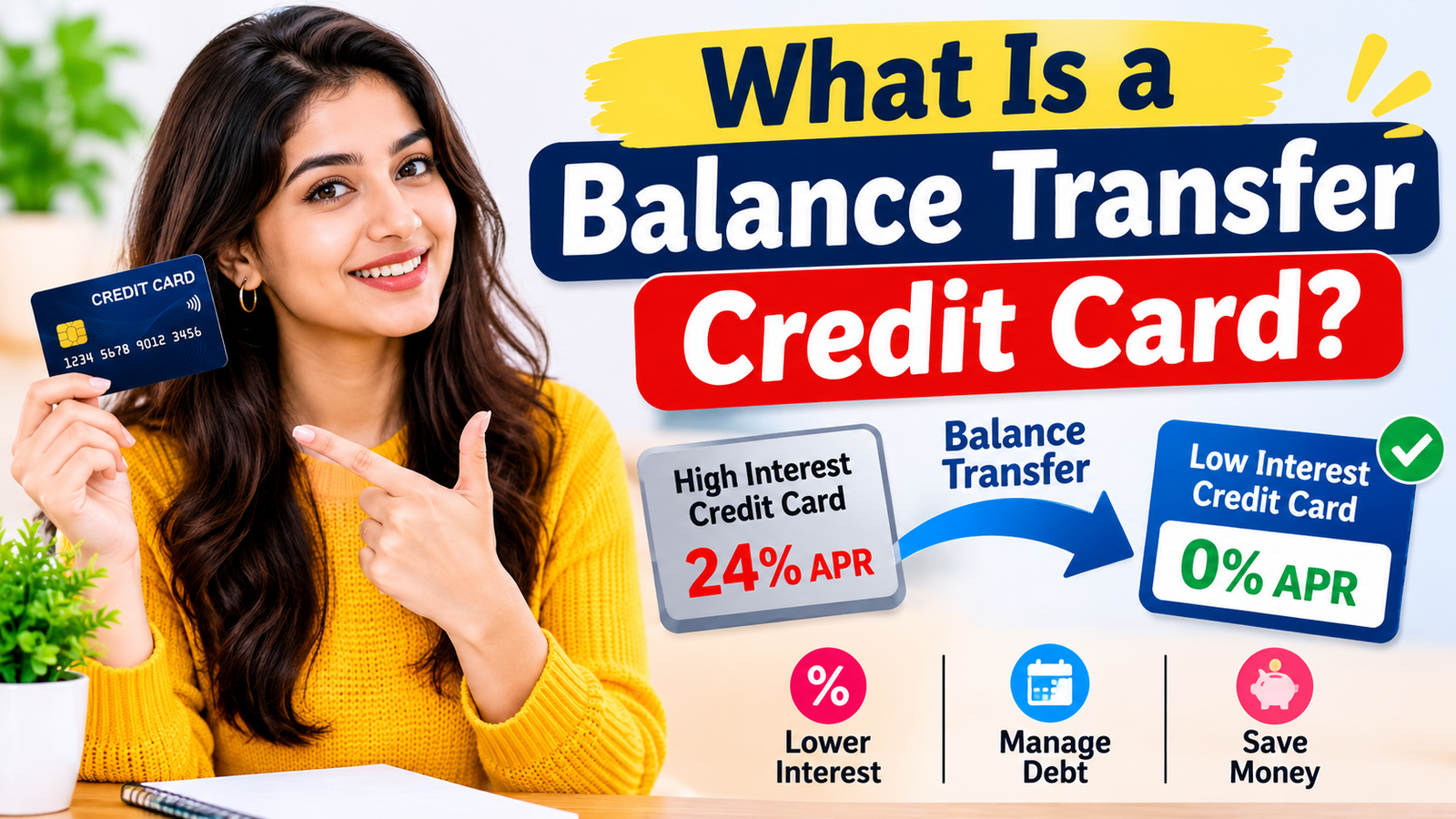
You may be able to transfer the balance and pay no interest on the transferred amount during the promotional period, provided you meet the offer’s conditions.
However, balance transfers often come with important conditions.
Balance Transfer Fees
The new card provider may charge a transfer fee.
For example, a 3% fee on a $3,000 transfer would cost $90.
You should include this fee when comparing the offer with your existing interest charges.
Promotional Period
A promotional rate usually applies for a limited period.
When the offer ends, the remaining balance may attract the standard balance transfer APR.
Missed Payment Conditions
Missing a required payment may affect your promotional offer or trigger other charges, depending on the card agreement.
New Purchases
Do not assume that new purchases receive the same promotional rate as your transferred balance.
Some cards apply different rates to purchases and transferred balances.
Is a Balance Transfer Worth It?
A balance transfer may help reduce interest costs if:
- The promotional rate is lower than your current rate.
- The transfer fee is reasonable.
- You can repay the balance within the promotional period.
- You understand the standard rate after the offer ends.
- You avoid adding unnecessary new debt.
Always calculate the total cost before transferring your balance.
A balance transfer does not remove your debt. It moves the outstanding amount to another credit account.
10. What Is a Promotional 0% APR Offer?
Some credit cards offer a temporary 0% APR on purchases, balance transfers, or both.
These offers can give you time to repay eligible balances without paying interest during the promotional period.
For example:
Imagine a credit card offers:
- 0% introductory APR on purchases.
- Promotional period of 12 months.
- Standard purchase APR of 23% after the offer ends.

If you make an eligible $1,200 purchase and repay it over the promotional period, you may avoid purchase interest if you follow the offer’s conditions.
However, you need to understand the terms.
Check These Details Before Accepting an Offer
- How long does the promotional period last?
- Does it apply to purchases, balance transfers, or both?
- Is there a balance transfer fee?
- What is the standard APR after the offer ends?
- What happens if you miss a payment?
- Are there restrictions on eligible transactions?
Some promotional offers also have special conditions. For example, certain store financing arrangements may use deferred interest rather than a standard 0% APR offer.
With deferred interest, interest may accumulate during the promotional period and become payable if you fail to clear the required balance by the deadline.
Read the agreement carefully before using this type of offer.
11. Why Can Credit Card Interest Appear Even After You Make a Payment?
This is a common question among credit card users.
You make a payment, check your statement, and still see an interest charge. Why does this happen?
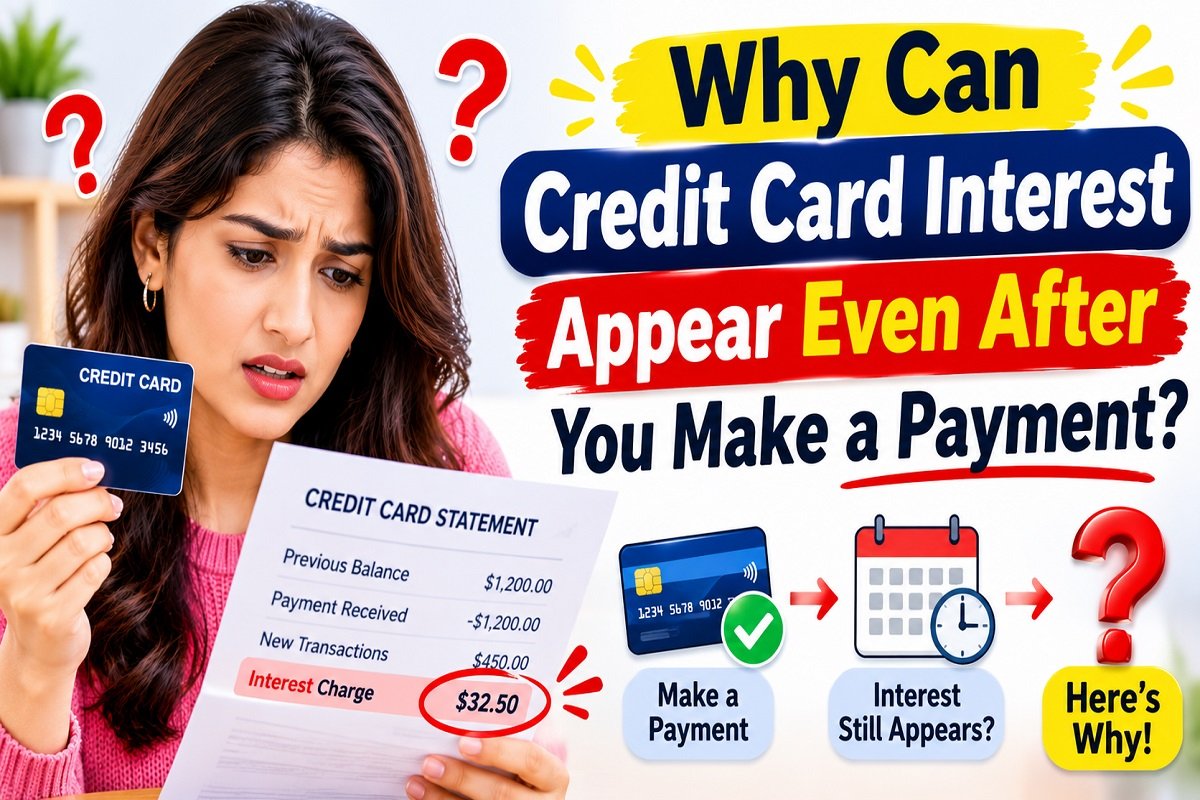
There are several possible reasons.
You Did Not Pay the Full Statement Balance
If you carry an interest-bearing balance, interest may continue to accrue on the unpaid amount.
Your Payment Was Made After the Due Date
A late payment may lead to interest charges, late fees, or other consequences under your card agreement.
You Made a Cash Advance
Cash advances commonly start accumulating interest from the transaction date.
You Have a Balance Transfer
A transferred balance may attract interest based on its own rate and conditions.
Residual or Trailing Interest
If you previously carried a balance, interest may continue accumulating between the statement date and the date your payment reaches the issuer.
This is sometimes called residual or trailing interest.
For example, you may pay the statement balance in full, but interest that accumulated before the payment was processed could appear on a later statement.
If you notice an unexpected interest charge, contact your card provider and ask for a breakdown.
Do not assume the charge is incorrect until you understand how it was calculated.
How to Avoid Credit Card Interest and Save Money
Understanding credit card interest is the first step. The next step is learning how to reduce or avoid these charges.
You do not always need to stop using credit cards to save money. You need to understand your repayment terms, control your spending, and make payments strategically.
Here are practical ways to manage your credit card interest.
12. Pay Your Full Statement Balance by the Due Date
One of the most effective ways to avoid interest on eligible purchases is to pay your full statement balance by the payment due date.
If your card offers a purchase grace period, paying the full eligible statement balance on time may allow you to avoid purchase interest.
For example:
Imagine your monthly statement shows:
- Statement balance: $1,500
- Minimum payment: $75
- Payment due date: 20 May
If you pay the full $1,500 by 20 May and meet your card’s grace period conditions, you may avoid interest on eligible purchases.
If you pay only $75, the remaining balance may attract interest.
Remember that your statement balance and current balance can be different. Your current balance may include purchases made after the statement closing date.
Check your card agreement to understand which balance you need to pay to avoid purchase interest.
13. Pay More Than the Minimum Amount
Sometimes you cannot afford to clear your entire credit card balance. In that situation, paying more than the minimum amount can help reduce your debt faster.
The minimum payment keeps your account within its required repayment terms when paid on time. However, it may leave a large outstanding balance.
Consider this example:
You have a credit card balance of $2,000 with a 24% APR.
If you pay only the minimum amount, your balance may take much longer to clear, and you may pay more interest.
If your budget allows you to make larger payments, you can reduce the outstanding balance more quickly.
Try these habits:
- Pay the required minimum before the due date.
- Add an extra payment whenever your budget allows.
- Avoid unnecessary purchases while repaying debt.
- Direct extra money towards high-interest balances.
- Review your progress every month.
Even a small increase in your monthly payment can make a difference over time.
14. Avoid Using Your Credit Card for Cash Advances
Cash advances can become expensive because they often involve a separate interest rate and transaction fee.
Interest commonly starts accumulating from the withdrawal date.
For example, imagine you withdraw $400 using your credit card.
Your provider charges a cash advance fee of 3%, which equals $12.
You may also pay interest on the withdrawal according to your card’s cash advance APR.
Before withdrawing cash, consider whether you have a lower-cost option.
You could check:
- Your available bank account balance.
- Whether your bank offers an affordable personal loan.
- Whether you can arrange a suitable payment plan.
- Whether the expense can be delayed until you have enough money.
Avoid using cash advances for regular expenses. They can increase your borrowing costs quickly.
15. Set Up Payment Reminders and Automatic Payments
Forgetting a payment date can lead to late fees and other consequences.
A simple reminder system can help you stay organised.
You can:
- Add payment due dates to your phone calendar.
- Set reminders three to five days before the due date.
- Enable payment notifications from your card provider.
- Use automatic payments where suitable.
- Check your account after each payment.
If you use automatic payments, make sure your linked bank account has enough money.
You can also set up automatic payments for the minimum amount and manually pay the remaining statement balance when possible.
This approach may help prevent accidental missed payments. However, always check that the payment has been processed successfully.
16. Compare Credit Card Interest Rates Before Applying
Not all credit cards have the same interest rates and fees.
Some cards offer lower purchase APRs, while others focus on cashback, rewards, travel benefits, or introductory offers.
Before choosing a card, compare the total cost of using it.
Look at these details:
| Credit card feature | What you should check |
|---|---|
| Purchase APR | Interest rate on eligible purchases |
| Cash advance APR | Interest rate on cash withdrawals |
| Balance transfer APR | Rate on transferred balances |
| Annual fee | Yearly cost of keeping the card |
| Late payment fee | Charge for missing a required payment |
| Foreign transaction fee | Cost of certain overseas transactions |
| Promotional APR | Duration and conditions of the introductory offer |
| Grace period | Conditions for avoiding purchase interest |
A card with attractive rewards may still cost you more if you regularly carry an unpaid balance.
For example, earning 2% cashback does not help much if you pay a much higher amount in credit card interest.
Choose a card based on your spending habits and repayment ability.
17. Contact Your Credit Card Provider if You Are Struggling
If you are finding it difficult to make your credit card payments, contact your provider before the situation becomes worse.
Explain your financial circumstances and ask whether they offer any support options.
Depending on the provider and your location, possible options may include:
- A temporary payment arrangement.
- A lower interest rate.
- A structured repayment plan.
- A hardship support programme.
- A review of certain fees.
Do not ignore calls, emails, or payment notices from your card provider.

If you cannot afford your repayments, you may also consider speaking with a recognised nonprofit credit counselling organisation or an authorised financial adviser in your country.
Be careful with companies that promise to erase your debt or guarantee that they can stop all collection activity.
18. Create a Simple Credit Card Interest Management Plan
You can manage credit card interest more effectively by following a monthly routine.
Here is a simple plan.
Step 1: Review Your Statement
Check your latest credit card statement.
Look at:
- Total statement balance.
- Minimum payment.
- Payment due date.
- Purchase APR.
- Interest charges.
- Other fees.
Step 2: Understand Your Spending
Review your recent transactions.
Identify purchases that were necessary and those you could have avoided.
This can help you control future credit card spending.
Step 3: Calculate Your Repayment Amount
Decide how much you can comfortably pay each month.
Try to pay the full statement balance whenever possible.
If you are carrying debt, create a realistic repayment target that fits your budget.
Step 4: Reduce High-Interest Debt
If you have multiple credit card balances, consider prioritising the card with the highest interest rate.
Continue making the required payments on your other accounts.
Step 5: Review Your Progress
At the end of each billing cycle, check whether your outstanding balance has decreased.
Review your interest charges and adjust your spending or repayment plan when necessary.
A consistent routine can help you understand where your money goes and reduce unnecessary borrowing costs.
Frequently Asked Questions About Credit Card Interest
1. Do Credit Cards Charge Interest Every Month?
Credit cards do not necessarily charge interest every month.
If you pay your full eligible statement balance by the due date and qualify for a grace period, you may avoid interest on purchases.
If you carry an interest-bearing balance, your provider may calculate interest according to your card agreement.
2. How Much Interest Will I Pay on a $1,000 Credit Card Balance?
The amount depends on your APR, average daily balance, billing period, and card issuer’s calculation method.
For example, with a 24% APR and an average balance of $1,000 over 30 days, estimated interest using a simple daily-rate calculation would be approximately $19.73.
Actual charges may differ.
3. Is 25% APR High for a Credit Card?
A 25% APR can represent an expensive borrowing cost.
Whether it is high compared with other available cards depends on your country, credit profile, market conditions, and the type of card.
Compare the APR, fees, and repayment terms before choosing a card.
4. Can I Avoid Credit Card Interest Completely?
You may be able to avoid interest on eligible purchases by paying the full statement balance by the due date when your card provides a grace period.
Cash advances and certain other transactions may attract interest immediately.
Always check your card agreement.
5. Does Paying My Credit Card Early Reduce Interest?
It can.
If your card calculates interest using a daily balance method, reducing your outstanding balance earlier may reduce the interest that accumulates.
However, if you qualify for a grace period and pay the full eligible statement balance by the due date, you may already avoid purchase interest.
6. Why Did I Get Charged Interest Even Though I Paid My Credit Card?
You may have carried a previous balance, made a cash advance, missed a payment, or lost your purchase grace period.
Residual interest may also appear after you pay off a balance because interest accumulated before the payment was processed.
Contact your card provider if you need a detailed explanation of a charge.
7. Does Paying the Minimum Payment Avoid Interest?
No. Paying the minimum amount generally helps you meet the required monthly payment, but the remaining balance may continue to attract interest.
Paying the full eligible statement balance is usually the better option for avoiding purchase interest when your card offers a grace period.
8. Is a 0% APR Credit Card Always a Good Deal?
Not always.
A 0% introductory APR offer may help reduce interest costs temporarily.
However, check the promotional period, transfer fees, standard APR after the offer ends, and payment conditions.
A promotional offer is useful only when you understand its terms and can manage the repayments.
9. Does Credit Card Interest Affect My Credit Score?
Interest charges themselves are generally not a direct credit scoring factor.
However, carrying high credit card balances can increase your credit utilisation. This may affect your credit score.
Missed payments can also damage your credit history.
Managing your balances and paying on time can support healthier credit habits.
10. Should I Stop Using My Credit Card to Avoid Interest?
You do not necessarily need to stop using your credit card.
You can use it for planned purchases and pay the full eligible statement balance by the due date.
However, if you are struggling with debt or spending, temporarily reducing credit card use may help you regain control of your finances.
Final Thoughts: Use Your Credit Card Without Paying Unnecessary Interest
Credit cards can be useful financial tools when you understand how they work.
The problem begins when you borrow more than you can comfortably repay or ignore the interest charges on your statements.
Remember these important habits:
- Understand your APR and card fees.
- Pay your full eligible statement balance when possible.
- Avoid cash advances unless necessary.
- Pay more than the minimum when carrying debt.
- Set reminders for payment due dates.
- Compare credit card offers carefully.
- Contact your provider if you face repayment difficulties.
You do not need to become a financial expert to manage credit card interest.
Start by understanding your statement, controlling your spending, and making payments on time.
Small changes in how you use your credit card can help you avoid unnecessary interest and build healthier financial habits.